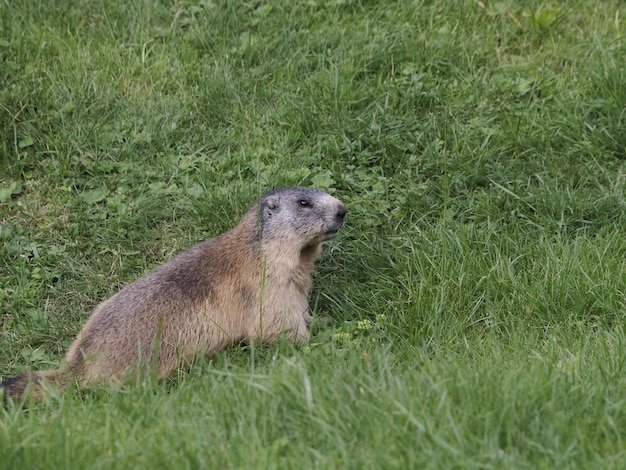
You're hiking a mountain trail, a furry, stout creature darts across your path, lets out a shrill whistle, and vanishes into the rocks. Was it a groundhog? A marmot? When it comes to Marmot & Groundhog Species and Identification, many wildlife enthusiasts find themselves in a delightful but confusing predicament. The truth is, that chunky, burrowing mammal you just saw could very well be both – because all groundhogs are marmots, but not all marmots are groundhogs.
This isn't just a quirky biological fact; it's the key to understanding and accurately identifying these fascinating members of the squirrel family. Prepare to become an expert spotter, distinguishing these furry friends based on everything from their tail to their social life.
At a Glance: Key Takeaways for Marmot & Groundhog Identification
- Genus vs. Species: A groundhog is one specific species (Marmota monax) within the broader Marmota genus (marmots).
- Eastern vs. Western: Groundhogs (Marmota monax) are primarily an Eastern and Central North American species. Most other marmot species are found in Western North America and other continents, often in higher elevations.
- Social Life: Groundhogs are largely solitary, while many other marmot species are highly social, living in colonies.
- Appearance Clues: Look for differences in size, fur color, tail length/bushiness, and ear prominence to distinguish species.
- Habitat Matters: Knowing where you are significantly narrows down your identification possibilities.
The Fundamental Truth: Unpacking the Marmot-Groundhog Relationship
Let's clear up the biggest source of confusion right away: A groundhog is, scientifically speaking, one of about 15 species of marmot. Specifically, it's Marmota monax. Think of it like this: All apples are fruit, but not all fruit are apples. Similarly, all groundhogs are marmots, but not all marmots are groundhogs.
This distinction is crucial because while they share a family resemblance – both are stocky, burrowing mammals in the Sciuridae family (which also includes squirrels, chipmunks, and prairie dogs) – their differences are what allow us to identify them accurately. Superficial resemblances often lead to the terms being used interchangeably, but with a little expert knowledge, you can tell the difference.
Marmots: An Overview of Nature's Chunky Whistlers
Marmots, as a genus (Marmota), are the heavyweights of the ground squirrel world. Across North America, Europe, and Asia, these large, sturdy rodents inhabit diverse landscapes, from alpine meadows to dense forests.
They are built for a life close to the ground, sporting short, powerful legs perfect for digging elaborate burrows. Their keen senses keep them alert to predators, and many species communicate with distinct, piercing whistling calls – earning them nicknames like "whistle-pig." Marmots are typically social creatures, with many species forming close-knit colonies, and they all share a remarkable trait: extended periods of hibernation, sometimes lasting more than half the year. Herbivorous by nature, they graze on a variety of plants, contributing to the health of their ecosystems. To dive deeper into the world of these fascinating rodents, explore All about marmots.
Meet the Groundhog: Marmota monax, the Famous Woodchuck
The groundhog (Marmota monax) holds a special place in folklore and agriculture, especially in the eastern and central United States and parts of Canada. Also known by charming local names like woodchuck, whistle-pig, or even land-beaver, this particular marmot species is exceptionally adaptable. You'll find groundhogs not just in open woodlands and fields, but increasingly in suburban areas, where they readily adapt to human proximity.
Unlike many of its social marmot cousins, the groundhog tends to be a solitary creature, preferring its own company except during the mating season. Their extensive burrow systems are vital for soil aeration but can be a nuisance when dug beneath crops, fences, or even building foundations. Don't underestimate them, though; groundhogs are surprisingly agile climbers and capable swimmers. Their diet is broad and opportunistic, favoring grasses, clover, alfalfa, and a wide array of garden vegetables – a trait that often puts them at odds with gardeners. Like all marmots, hibernation is central to their life cycle, typically lasting from October until March or April.
Beyond the Basics: How to Spot the Differences (The Real Identification Guide)
Now that we understand the family ties, let's get down to the practical science of identification. The specific characteristics of the Marmota monax (groundhog) set it apart from its various marmot relatives. Observing these key distinctions will transform you into a confident marmot identifier.
Size & Body Build: Who's the Biggest on the Block?
While all marmots are sturdy, there's a noticeable size range.
- Groundhogs (Marmota monax): These are medium-sized marmots, typically weighing between 5 and 10 pounds and measuring 16 to 20 inches in length, excluding the tail. They have a moderately robust build.
- Other Marmot Species: Many other marmot species, especially those in alpine environments, tend to be significantly larger and stockier. It's not uncommon for them to tip the scales at 15 pounds or more, with a more compact, barrel-chested appearance. Think of the Yellow-bellied or Hoary Marmot for examples of bulkier physiques.
Fur Color & Markings: A Palette of Browns, Grays, and Golds
Fur color and distinctive markings are often the first clues to species identification.
- Groundhogs: Their coats are typically a grizzled brownish-gray, often with a reddish or cinnamon tint, particularly on their underside. This provides excellent camouflage in woodlands and fields.
- Other Marmot Species: These often boast more varied and striking color patterns.
- The Yellow-bellied Marmot (Marmota flaviventris) lives up to its name with distinctive yellowish-orange fur on its belly.
- The Olympic Marmot (Marmota olympus) starts with a rich brownish-gray, which can lighten significantly with age.
- The Hoary Marmot (Marmota caligata) is renowned for its "hoary" or frosty, grayish-white fur, especially on its shoulders and head, giving it a grizzled, distinguished look.
- The Vancouver Island Marmot (Marmota vancouverensis) is known for its rich, dark chocolate brown fur and a contrasting white patch on its chest.
Tail Morphology: Bushy Stump vs. Sleek Streamer
Pay close attention to the tail – it's a surprisingly reliable identifier.
- Groundhogs: Possess a relatively short, bushy, and dark tail. It often appears quite stubby, blending into their rear.
- Other Marmot Species: Many marmot species, particularly those in the Western US and Canada, tend to have longer, often sleeker tails. These tails can be less bushy than a groundhog's, and some even feature a lighter or distinct tip. The Long-Tailed Marmot (Marmota caudata) is, as its name suggests, a prime example of this difference.
Facial Features: Ears and Snouts Tell a Story
The face, specifically the ears and snout, offers more subtle but important clues.
- Groundhogs: Generally have smaller, rounder ears that are often barely visible, tucked into their fur. Their snouts are typically broad and robust, built for digging. You might also notice a darker band of fur around their eyes, giving them a slightly masked appearance.
- Other Marmot Species: Often exhibit more prominent, clearly visible ears. Their snout shapes can also vary, sometimes appearing a bit more pointed or refined depending on the species.
Habitat & Geographic Range: Location, Location, Location!
Where you spot a marmot is one of the most powerful identification tools.
- Groundhogs: Predominantly found in open fields, woodlands, and increasingly in suburban areas throughout the Eastern and Central United States, extending into parts of Canada. If you're in New York, Ohio, or Pennsylvania and see a marmot-like creature, it's almost certainly a groundhog.
- Other Marmot Species: Typically inhabit more specialized, often higher-elevation environments. The Yellow-bellied and Hoary Marmots, for instance, thrive in rocky alpine meadows, talus slopes, and mountainous regions primarily in the Western United States and Canada. The Olympic Marmot is unique to Washington's Olympic Peninsula. If you're in the Rockies or Cascades, you're looking at a different species.
Dietary Habits: Opportunists vs. Specialists
While all marmots are herbivores, their menus can differ based on availability.
- Groundhogs: Are true opportunistic feeders. They'll munch on a vast array of grasses, clovers, alfalfa, dandelions, garden vegetables, and even tree bark or small insects if desperate. Their diet reflects the abundance of flora in their widespread habitats.
- Other Marmot Species: Especially those in alpine environments, often have a more specialized diet, focusing on specific mountain flora, forbs, seeds, and occasionally insects. In some colonies, you might even observe coordinated foraging behaviors, a testament to their social nature.
Social Structures: Lone Ranger vs. Bustling Colony
This is perhaps one of the most striking behavioral differences.
- Groundhogs: Are largely solitary animals. While their burrows might be near each other, they typically maintain individual territories and don't engage in extensive social interactions outside of mating season or raising young.
- Other Marmot Species: Many, like the Yellow-bellied, Hoary, and Olympic Marmots, are highly social. They live in well-defined colonies with intricate burrow systems, sharing responsibilities like vigilance against predators (using those loud whistles!). You'll often see them engaging in social behaviors such as play-fighting, sunbathing together, or grooming one another.
Hibernation Patterns: Long Naps, Longer Naps
All marmots hibernate, but the duration can vary.
- Groundhogs: Typically hibernate from October until March or April, a respectable period of about 5-6 months, depending on the climate.
- Other Marmot Species: Especially those residing at higher elevations or in colder climates, can have even longer hibernation periods. It's not uncommon for some species to hibernate for up to eight months out of the year, a testament to their metabolic adaptations to harsh winters.
A Field Guide to North American Marmots (and Beyond)
Let's put our identification skills to the test by looking at specific marmot species, highlighting their unique characteristics and where you're most likely to find them.
Common Groundhog (Marmota monax)
- Description: 16–26 inches long, 4–13 pounds. Grizzled brownish-gray fur, sometimes with reddish tints. Short, bushy, dark tail. Small, barely visible ears.
- Habitat & Range: Open fields, woodlands, suburban areas across the Eastern and Central U.S., parts of Canada, and Alaska.
- Social Behavior: Mostly solitary.
- Note: The "Eastern Groundhog" (Marmota monax monax) is a regional population within this species, primarily found in the Eastern U.S. and Canada, often slightly smaller.
Yellow-Bellied Marmot (Marmota flaviventris)
- Description: Larger than the groundhog, stockier build. Yellowish-orange fur on the belly, brownish-yellow elsewhere. Often a white spot between the eyes. Longer tail than a groundhog, less bushy. More prominent ears.
- Habitat & Range: Rocky, mountainous areas, alpine meadows, and talus slopes in Western North America.
- Social Behavior: Highly social, lives in colonies. Known for loud whistles.
- Hibernation: Up to eight months.
Vancouver Island Marmot (Marmota vancouverensis)
- Description: Critically endangered. Rich, dark chocolate brown fur with a distinctive white chest patch and white nose.
- Habitat & Range: Native only to Vancouver Island, British Columbia, in alpine meadows.
- Social Behavior: Lives in small colonies.
- Conservation: Fewer than 200 individuals exist, making it one of the rarest mammals.
Hoary Marmot (Marmota caligata)
- Description: Large, with striking frosty, grayish-white fur on shoulders and head ("hoary"). Darker legs and tail. Distinct white muzzle and dark cap.
- Habitat & Range: Rocky alpine slopes and meadows in Western Canada and the northwestern U.S. (e.g., Alaska, Washington, Montana).
- Social Behavior: Social groups, known for very loud, piercing whistles.
Olympic Marmot (Marmota olympus)
- Description: Endemic to Washington’s Olympic Peninsula. Golden-brown fur that lightens with age. Stocky build.
- Habitat & Range: Subalpine meadows and talus slopes exclusively in the Olympic Mountains.
- Social Behavior: Lives in colonies.
Alaska Marmot (Marmota broweri)
- Description: Smaller than the Common Groundhog. Dark brown fur with lighter patches.
- Habitat & Range: Rocky tundra and alpine meadows in Alaska's Brooks Range.
- Social Behavior: Small social colonies.
Other Notable Marmot Species (Found in Canada and/or Asia)
While our focus has been primarily North American, other marmot species exist globally, further illustrating the genus's diversity:
- Gray Marmot (Marmota baibacina): Found in parts of Canada's Yukon and British Columbia, and Central Asia. Large, grizzled gray fur. Lives in colonies in grassy alpine and subalpine zones.
- Long-Tailed Marmot (Marmota caudata): Parts of British Columbia and Central Asia. As its name suggests, it has a notably long tail, reddish-brown fur. Small colonies in high-altitude meadows.
- Himalayan Marmot (Marmota himalayana): High-altitude regions of western Canada and Asia. Thick, brownish fur for insulation. Social colonies in alpine grasslands.
- Tarbagan Marmot (Marmota sibirica): Parts of Canada's Yukon and across Asia. Robust build with coarse brownish-gray fur. Strong social behaviors within colonies in grassy steppes and mountains.
- Black-Capped Marmot (Marmota camtschatica): Found in Alaska and parts of Siberia. Smaller than many marmots. Dark fur with a distinctive black cap on its head. Lives in social groups in tundra and alpine meadows.
Your Go-To Identification Checklist
When you encounter a marmot-like creature, run through this mental checklist for accurate identification:
- Observe the Tail: Is it short, bushy, and dark (like a groundhog)? Or longer, sleeker, perhaps with a lighter tip (like many other marmots)?
- Examine Facial Features: Are the ears small and barely visible (groundhog)? Or more prominent and clearly visible (other marmots)? Note the snout shape as well.
- Consider the Habitat: Are you in an open field or woodland in the Eastern U.S. (likely a groundhog)? Or a rocky alpine meadow at high elevation in the Western U.S. or Canada (likely a Yellow-bellied, Hoary, or Olympic Marmot)?
- Note Social Behavior: Is the animal solitary, or is it part of a larger, active colony with others whistling and interacting (many other marmot species)?
- Look at the Coloration: Is it plain grizzled brownish-gray (groundhog)? Or does it have distinct markings like a yellow belly, frosty white shoulders, or rich dark brown fur (other marmots)?
By systematically going through these points, you'll dramatically increase your chances of correctly identifying the species before you.
Common Questions & Misconceptions About Marmots and Groundhogs
Let's address some frequently asked questions that come up when discussing these rodents.
Is a woodchuck the same as a groundhog?
Yes, absolutely. "Woodchuck" is simply another common name for the groundhog (Marmota monax). Other regional names include "whistle-pig" and "land-beaver."
Do marmots and groundhogs live in the same places?
Not generally in the sense of different species occupying the exact same narrow ecological niche. While groundhogs are a type of marmot, their preferred habitat (open woodlands, fields, suburban areas in the East) is distinct from many other marmot species (rocky alpine meadows, high elevations in the West). Their ranges overlap at a continental level, but specific habitat preferences differ.
Are marmots dangerous?
Marmots, including groundhogs, are wild animals and should always be treated with respect and observed from a distance. While not typically aggressive, they can bite or scratch if they feel threatened, cornered, or are protecting their young. They are generally shy and will flee if approached too closely.
Do all marmots whistle?
Many marmot species are known for their distinct, piercing alarm whistles, giving rise to nicknames like "whistle-pig." This vocalization is a crucial form of communication within social colonies, alerting others to potential predators. Groundhogs also whistle, though perhaps not as famously or frequently as some of their alpine cousins.
Are prairie dogs a type of marmot?
No, prairie dogs are not marmots, though they are also part of the Sciuridae family (squirrels). While they share some characteristics with marmots, such as being burrowing, social rodents, they belong to a different genus, Cynomys.
Becoming a Savvy Marmot Spotter
Identifying marmots and groundhogs might seem like a niche skill, but it adds a rich layer of appreciation to any encounter with these robust rodents. By understanding the fundamental relationship between a genus and its species, and by tuning into specific visual and behavioral cues – from the bushiness of a tail to the social dynamics of a colony – you can move beyond simple observation to genuine identification.
The next time you spot a furry, stocky creature digging diligently or standing sentinel, take a moment. Consider its location, its size, its color, and its companions. You'll not only be identifying a particular species but also gaining a deeper insight into the incredible diversity and adaptability of the natural world. Happy spotting!